 Add to Chrome
 Add to Firefox
 Add to Edge
The Llama 4 Herd: Architecture, Training, Evaluation, and Deployment Notes
Jan 15, 2026
This document consolidates publicly reported technical details about Metas Llama 4 model family. It summarizes (i) released variants (Scout and Maverick) and the broader herd context including the previewed Behemoth teacher model, (ii) architectural characteristics beyond a high-level MoE description covering routed/shared-expert structure, early-fusion multimodality, and long-context design elements reported for Scout (iRoPE and length generalization strategies), (iii) training disclosures spanning pre-training, mid-training for long-context extension, and post-training methodology (lightweight SFT, online RL, and lightweight DPO) as described in release materials, (iv) developer-reported benchmark results for both base and instruction-tuned checkpoints, and (v) practical deployment constraints observed across major serving environments, including provider-specific context limits and quantization packaging. The manuscript also summarizes licensing obligations relevant to redistribution and derivative naming, and reviews publicly described safeguards and evaluation practices. The goal is to provide a compact technical reference for researchers and practitioners who need precise, source-backed facts about Llama 4.

Microscaling Data Formats for Deep Learning
Oct 19, 2023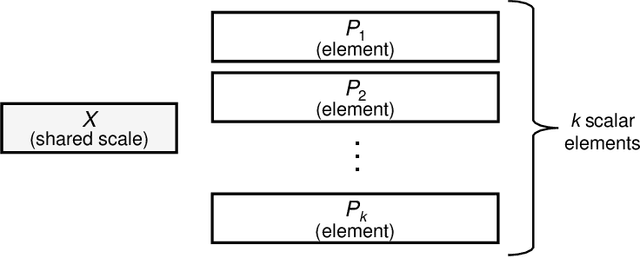
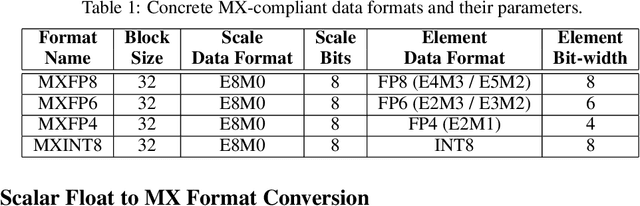
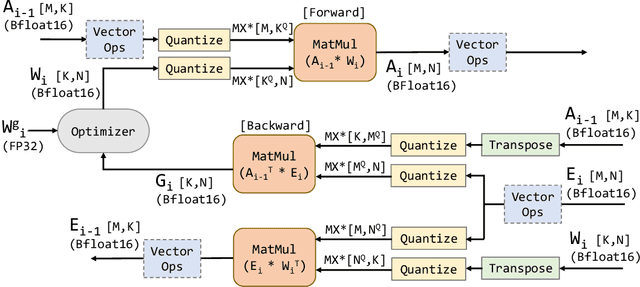

Narrow bit-width data formats are key to reducing the computational and storage costs of modern deep learning applications. This paper evaluates Microscaling (MX) data formats that combine a per-block scaling factor with narrow floating-point and integer types for individual elements. MX formats balance the competing needs of hardware efficiency, model accuracy, and user friction. Empirical results on over two dozen benchmarks demonstrate practicality of MX data formats as a drop-in replacement for baseline FP32 for AI inference and training with low user friction. We also show the first instance of training generative language models at sub-8-bit weights, activations, and gradients with minimal accuracy loss and no modifications to the training recipe.
FBGEMM: Enabling High-Performance Low-Precision Deep Learning Inference
Jan 13, 2021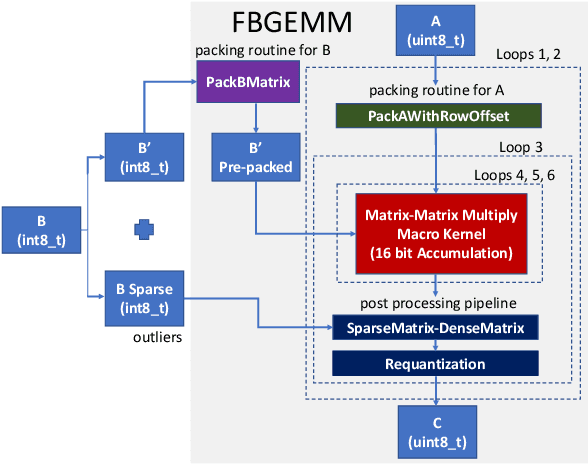
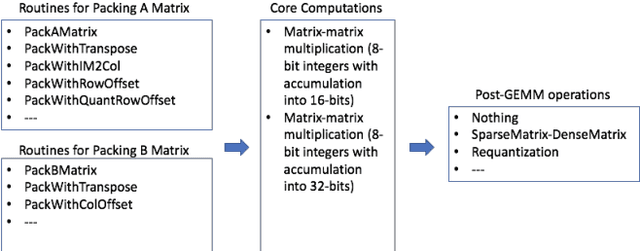
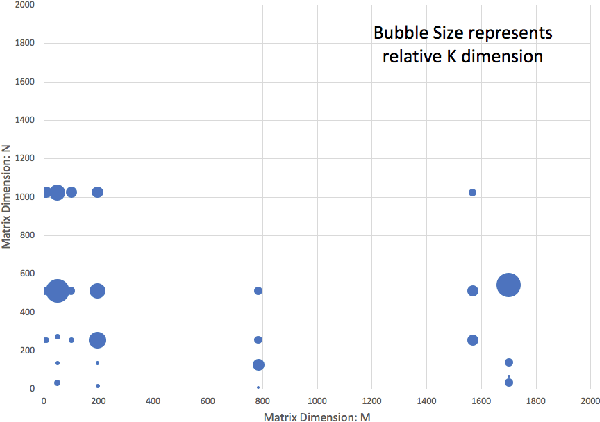
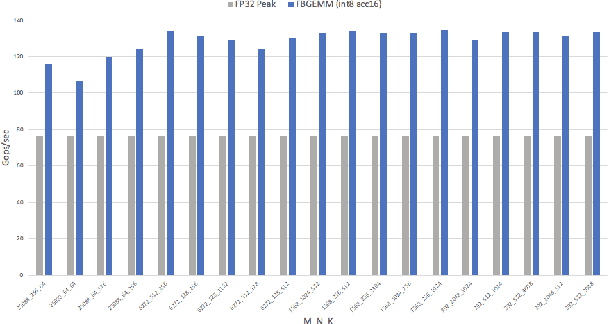
Deep learning models typically use single-precision (FP32) floating point data types for representing activations and weights, but a slew of recent research work has shown that computations with reduced-precision data types (FP16, 16-bit integers, 8-bit integers or even 4- or 2-bit integers) are enough to achieve same accuracy as FP32 and are much more efficient. Therefore, we designed fbgemm, a high-performance kernel library, from ground up to perform high-performance quantized inference on current generation CPUs. fbgemm achieves efficiency by fusing common quantization operations with a high-performance gemm implementation and by shape- and size-specific kernel code generation at runtime. The library has been deployed at Facebook, where it delivers greater than 2x performance gains with respect to our current production baseline.
Deep Learning Inference in Facebook Data Centers: Characterization, Performance Optimizations and Hardware Implications
Nov 29, 2018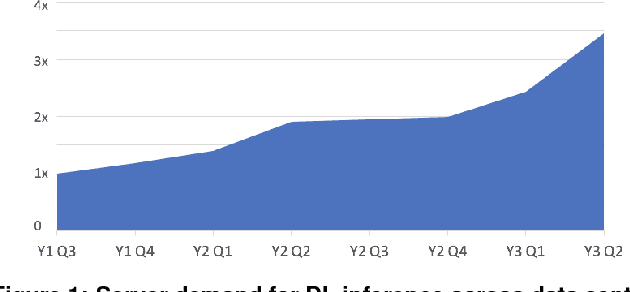
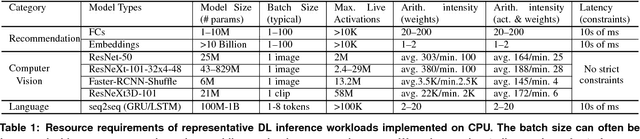
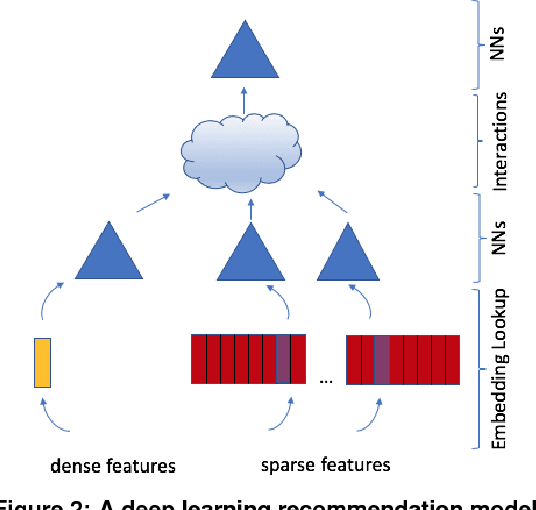
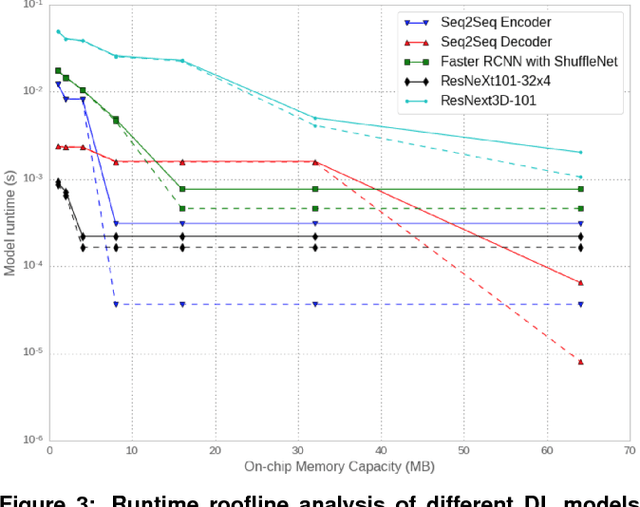
The application of deep learning techniques resulted in remarkable improvement of machine learning models. In this paper provides detailed characterizations of deep learning models used in many Facebook social network services. We present computational characteristics of our models, describe high performance optimizations targeting existing systems, point out their limitations and make suggestions for the future general-purpose/accelerated inference hardware. Also, we highlight the need for better co-design of algorithms, numerics and computing platforms to address the challenges of workloads often run in data centers.